Work / Venue / Events
D:NA
A distinctive website, an editable programme and an integrated box office for an artist-led space in Folkestone.
ScopeInteractive identity, a Sanity content editor, Stripe payments and a private organiser door list.
ConstraintThe space has a character of its own, and the website had to carry it.
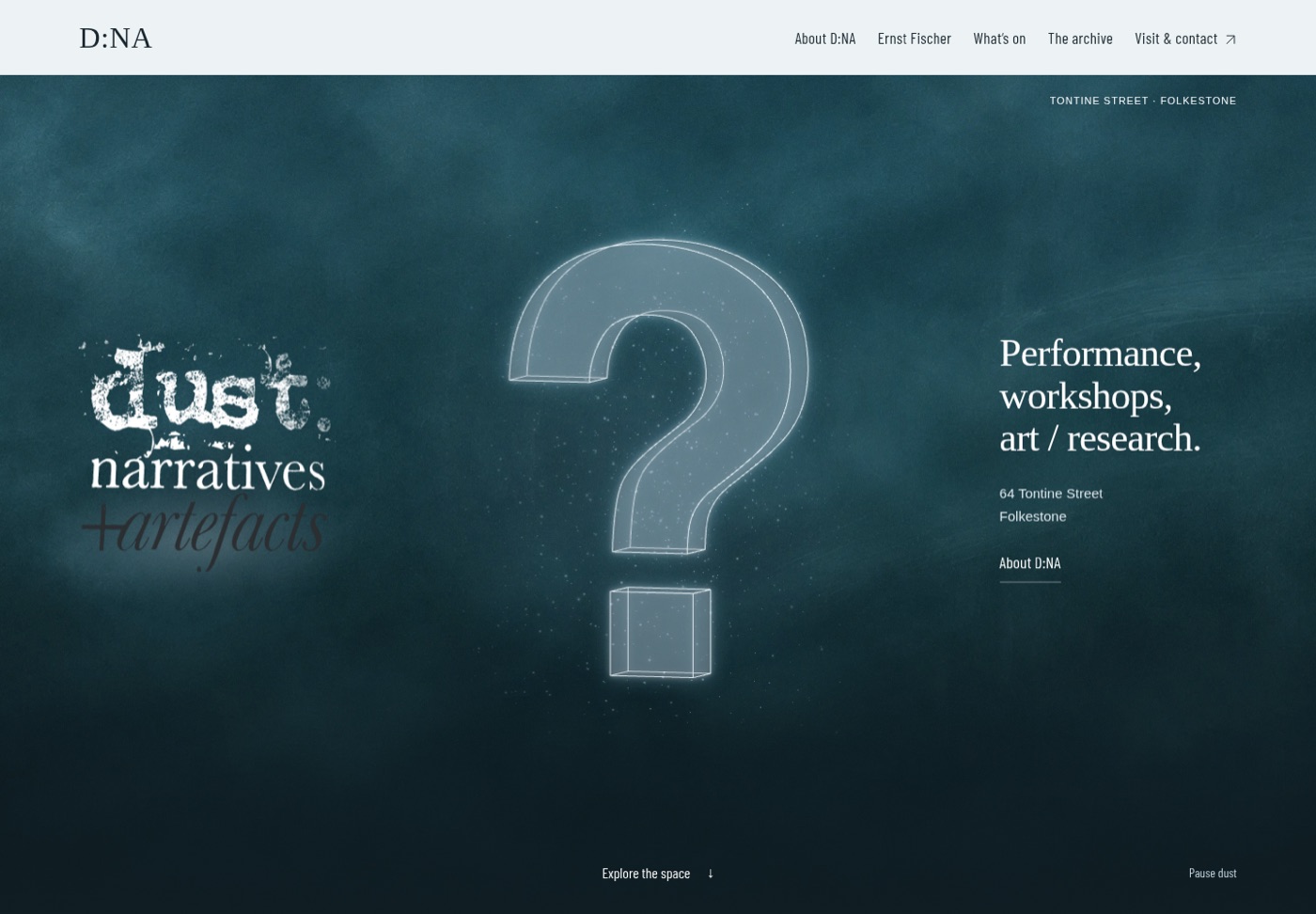
D:NA — Dust: Narratives & Artefacts — runs performance, workshops, installations and research from 64 Tontine Street in Folkestone. A site for that has two jobs: say what the place is, then be useful about it. What’s on, who is behind it, how to find the door, how to book.
We built the programme out of material the space already had — rusted steel, torn posters, copper — and then made the ordinary parts work properly. Behind the public pages, an editor keeps the programme current and a booking system carries visitors from choosing a ticket to receiving their confirmation.
A sign you can push around
The identity is a question mark. As a flat graphic with a tilt baked in, it was an idea rather than an object, so we rebuilt it from the sign’s own artwork into geometry that is genuinely three-dimensional: lit from the inside, hanging in a slow cloud of dust, yours to drag, click or work with the keyboard.
That is a lot of scene to run, so it loads on the homepage and nowhere else, the dust can be paused, it stops when it scrolls out of view, and it steps aside entirely for anyone who has asked for less motion.
- Design directionIdentity grown from the space’s own material, rusted sheets included.
- Interaction3D elements for a sense of place; tickets bought on the page.
- ContentProgramme and artwork, rewritten out of staccato sales lines.
- BuildOne ticketing system, and a site that changes with the programme.
Letting the posters be posters
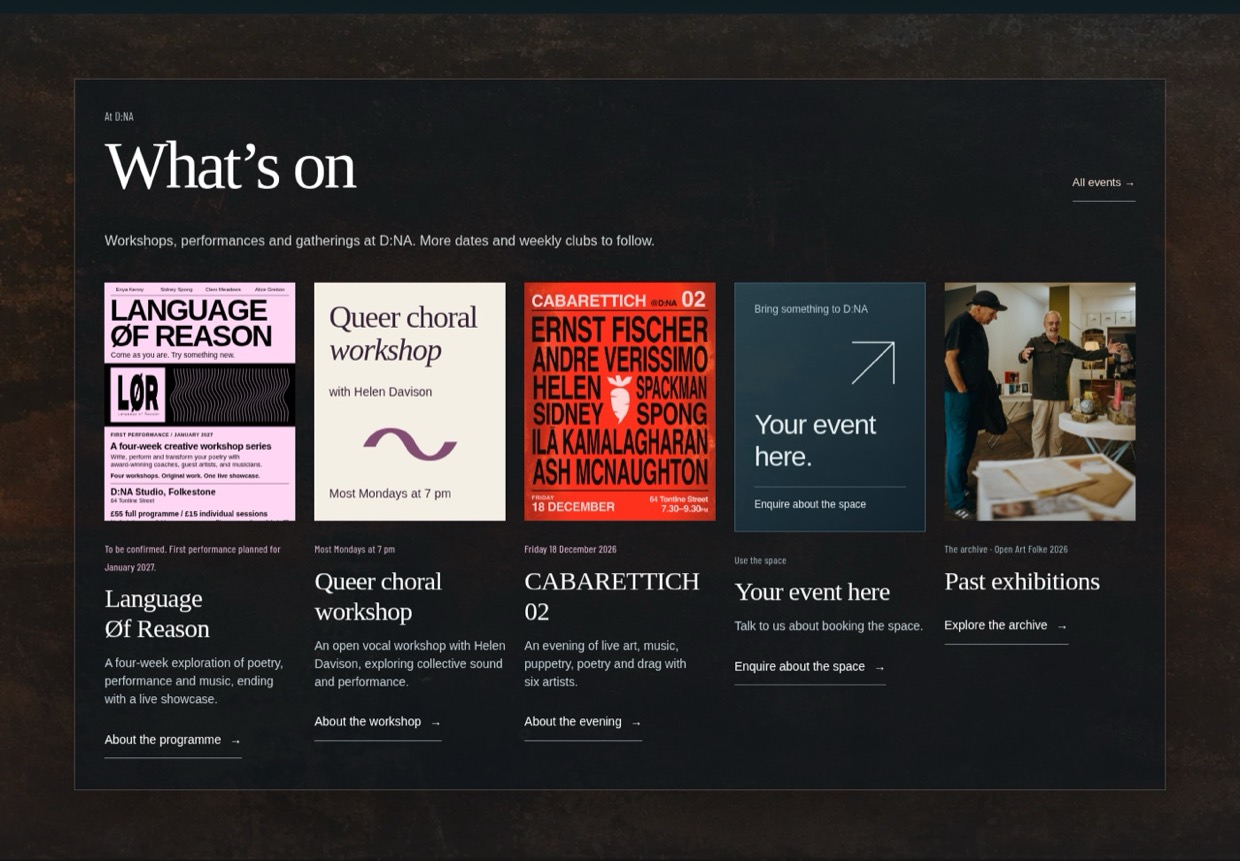
The programme began as small rust accents and a rebuilt poster that made a poor job of the artists’ names. The copper became the surround for the whole section instead, and the artwork the venue is sent now appears as whole posters, with descriptions rewritten out of staccato sales lines.
The hire card — “Your event here” — is deliberately not shaped like an event, and it goes to the enquiry form rather than opening an empty page. Nothing on the programme leads to a blank.
A programme the team can run
Keeping a venue’s website current should not mean asking a developer to change a date. We shaped the Sanity editor around the tasks Ernst recognises: the homepage, his full biography, upcoming events, the archive and booking settings.
Posters, artist biographies, ticket prices and capacity live alongside the event. Dates are entered once and formatted for the website automatically. Up to five events can be chosen and reordered for the homepage, with the rest on the full programme.
The team can add events, update the programme and publish changes themselves, without coming back to us for each edit.
Different prices. One room.
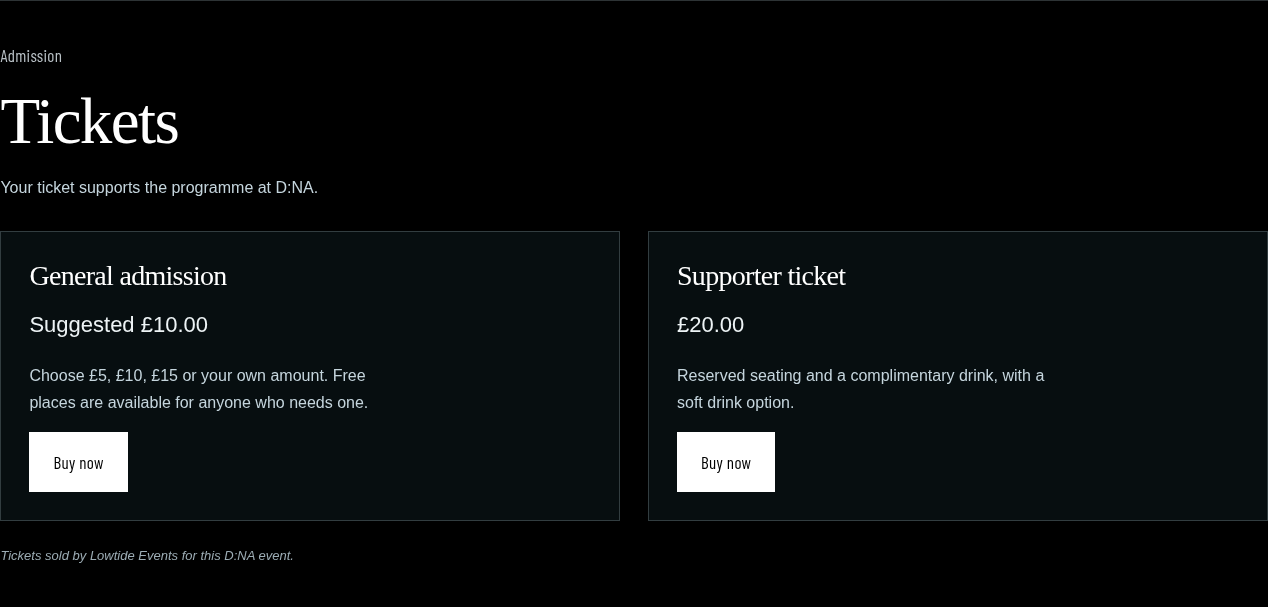
Cabarettich has twenty-five places. General admission is pay-what-you-can, with a suggested £10 and the option to enter zero. A £20 supporter ticket includes reserved seating and a drink.
Every ticket draws on the same capacity. There is no separate allocation of supporter seats: someone choosing to pay more supports the event without changing how many people the room can hold.
The ticket cards keep that choice clear, then open the appropriate booking form. The performance stays the focus until a visitor is ready to book.
From booking to the door
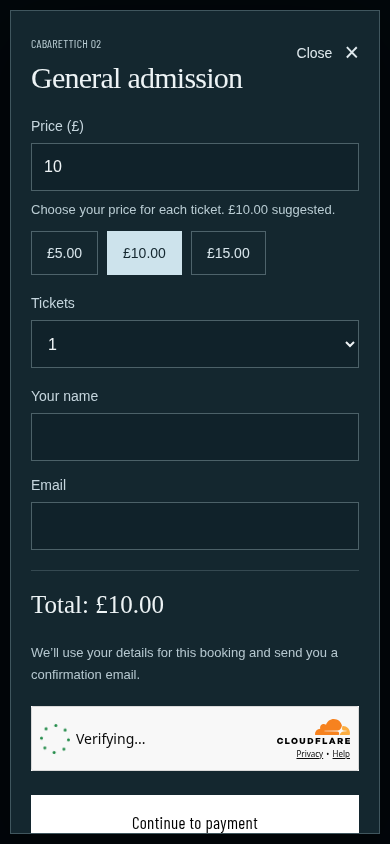
Choose a ticket, set the price and quantity, then continue to Stripe’s hosted checkout. Free bookings need no card payment. The booking form works on a phone, closes with Escape and returns focus to the ticket button.
A confirmation email brings together the date, location, ticket details, booking reference and a private booking link. For the organisers, a protected door list supports search, check-in, CSV export and confirmation resends. Email-code login means they do not need a Cloudflare account.
The result is a system the team can use to run an event: add it to the programme, open bookings, send confirmations and check people in at the door.
Client
D:NA — Dust: Narratives & Artefacts, 64 Tontine Street, Folkestone
What we did
Design direction, interaction, content editing, CMS and ticketing
Built with
HTML, CSS and JavaScript; Three.js; Sanity; Cloudflare Pages and Workers; Stripe Checkout
Developed with D:NA by Sidney Spong, who also participates as an artist. Posters, photographs and the sign belong to D:NA and the artists.
Tell us what you’re making.
We’ll have a look first. Send a few lines: what the project is, what isn’t working, and anything you already have.